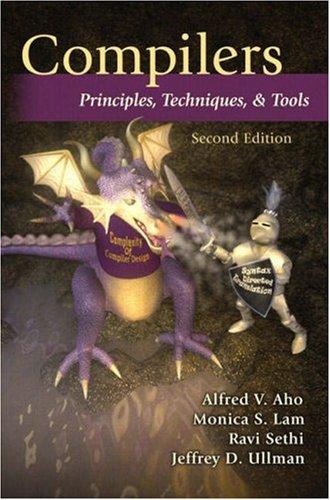
Compilers: Principles, Techniques, and Tools
Alfred V. Aho, Monica S. Lam, Ravi Sethi, Jeffrey D. Ullman
25 people recommended it in 10 threads, 2011–2022.
4 commenters pushed back on it — worth reading the threads.
What people on Hacker News said
It really changed my whole way of thinking about a fundamental class of programming problems.
The "dragon book" takes a lot of the mystery out of compilers. That's somewhat helpful when writing code that needs to be fast. It's super helpful if you want to work with compiler-related technologies such as LLVM.
As someone who has quite a few books on compilers, program analysis, type theory, etc... I find the Dragon book an irreplaceable reference to this day. It has a breadth of content shared by very few other books.
Compilers: Principles, Techniques, and Tools by Aho, Sethi, and Ullman—also known as "The Red Dragon Book".
Compilers: Principles, Techniques, and Tools - Aho, Lam, Sethi, and Ullman (a.k.a. "Dragon Book")
Second is the famous 'Dragon Book', Compilers: Principals, Techniques and Tools[3] and the associated course which is 6.035[4]
Where it comes up
- Ask HN: What language-agnostic programming books should I read? 2017 · 7 recommendations
- Ask HN: What are the most fundamental books on computer science? 2019 · 4 recommendations
- The most mentioned books on Stack Overflow 2017 · 3 recommendations
- Must Read CS Books For Self Self-Taught Programmers 2011 · 3 recommendations
- Ask HN: Which books do you consider real gems in your field of work/study? 2022 · 2 recommendations
- What is the single most influential book every programmer should read? 2011 · 2 recommendations
- Ask HN: The book that did it for you in math and/or CS? 2022 · 1 recommendation
- Ask HN: Books you plan to read in 2020? 2019 · 1 recommendation
- Books I Recommend 2019 · 1 recommendation
- Why Are College Textbooks So Absurdly Expensive? 2013 · 1 recommendation